martes, 8 de junio de 2010

BBC Mundo


Apple y Google luchan por los teléfonos inteligentes

http://www.bbc.co.uk/mundo/ciencia_tecnologia/2010/06/100608_apple_google_telefonos_inteligentes_amab.shtml

David Cuen - BBC Mundo, Tecnología


Las nuevas características del iPhone 4 hacen que la competencia sea más reñida.


La batalla por el control de los teléfonos inteligentes subió de tono. En una esquina lucha Apple, en la otra Google. El primero presenta el iPhone 4 y el segundo comienza a distribuir la nueva versión de Android 2.2 en varios de sus teléfonos celulares. Los dos luchan por el control de un mercado multimillonario.


jueves, 27 de mayo de 2010

Northwest Folklife


Another extra credit opportunity:

Folklife.... Crédito Extra ... 2010

Choose ONE Spanish cultural event to attend. Take pictures to show you attended the event. Write one paragraph describing what you saw, heard, and learned (Spanish 1 in English, Spanish 2 & 3 in Spanish). Use details and “recreate” the scene for me! Then write a second paragraph (Spanish 1 in English, Spanish 2 & 3 in Spanish) to convince your reader why they should attend this event next year. Or you may critique it and convince your reader not to attend it. Choose the best pictures and include them in color with your typed write-up of the event.

5-10 Extra credit points will be applied to your “project category” and the number of points will depend on the quality of the work.

Double check the internet for times. This is the schedule as posted on 5/25/10.

Friday
International Dance Stage
Ballet Folklorico Sol Azteca Mexican Folkloric Dance 08:00 PM
Bailadores De Bronce Mexican Folkloric Dance Group 08:40 PM

Saturday
International Dance Stage
Jacquelina's Dances of Spain Flamenco and Spanish Dance 11:00 AM
Guelaguetza Mexican Folk Dances 01:40 PM

Sunday
Tango Argentino Tango Dance And Music 08:10 PM
La Pena Flamenca de Seattle Flamenco Music/Dance of Spain 08:50 PM

MondayAna Montes & Flamenco Danzarte Flamenco Dance & Percussion 06:40 PM

lunes, 24 de mayo de 2010

Inmigracion y la Familia.


Over the weekend, I read an opinion article in the New York Times about issues around immigration policy in Arizona. As we continue in our unit about family, think about how the family unit is connected to immigration.


As an extra credit assignment, read some of the articles below and give your advice in Spanish about what "we" (as in the United States, individual states, Seattlites, global citizens - you pick!) should do.


ie. Debemos... or El gobierno debe...


Do your best to write a short paragraph (about 10 sentences) giving your opinion and backing it up with at least one source.
Articles:

**Worth 5-10 points in the project category.

domingo, 16 de mayo de 2010

Familia

El Arbol de la Familia...

This project contains three parts:
  • an oral presentation: present family tree, 5 questions prepared
  • an artistic representation of your, a celebrity, or an imaginary family tree
  • a brief write-up of how you would answer the questions: What do you do with your family? What chores or responsibilities do you and your family members have?

Details:

  • Rough draft = 20 classwork points:
  • (1) shows the teacher what kind of family tree you will create, (2) includes at least 7 family members, (3) has a written caption for each family member that has the name, and a brief description (ex. Este es mi padre Francisco. El es muy trabajador y cariñoso)
  • Final Product = 20 project points:
  • Family Tree: 10 points for appearance (clean, and shows time and thought), 10 points for the captions.
  • Oral Participation = 20 project points:
  • Again, as we did with the food unit, this portion will be graded on effort and preparedness.
  • Bring to class: (1) a written script that answers the questions "What do you like to do with your family?" and "What chores or responsibilities do you and your family have?"; (2) at least 5 questions that you could ask each presenter; and (3) your family tree.

Examples of Artistic Representations of the Family Tree:

My Grandparents, My Parents, and I (Family Tree), 1936

Frida Kahlo (Mexican, 1907-1954)


El Arbol de la Vida


Josefina Aguilar Alcantara,
Autorretrato con familia, 1997.

National Museum of Mexican Art
Chicago, IL


Example of a Final Product:


Preguntas:
  • ¿Cómo es tu abuelo?
  • ¿Qué te gusta hacer con tu familia?
  • ¿Qué hacen los fines de semana?
Paragraph:

Mi abuelo es muy trabajador y tiene canas. El es simpatico y nos gusta ir a Pikes Place Market los sabados. A mi familia y yo nos gusta caminar con el perro, y viajar. Los fines de semana salimos por la noche para comer en una restaurante.

domingo, 25 de abril de 2010

Manu Chao


In class on Friday, I mentioned a musician who has helped me to understand the use of indirect objects with gustar (ie. me gusta el café). Check out the link below to explore his official website and to learn more about his politics and music.

El Mundo de Manu Chao

¿Qué comemos? La Clase 6

Para Comer:
el pollo
la piña
las fresas
los cereals: Lucky Charms
la hamburguesa de pollo
las hamburguesas
la ensalada
las manzanas
la pasta
la injera
el lasaña
la carne
las galletas
el salmon
la salsa
el mango
el espárrago
las papas fritas
el pan dulce
el tocino


Para Tomar
:
la limonada

¿Qué comemos? La Clase 5

Para Comer:
el pan
el chocolate
el guacamole
el queso
las uvas
los bagels
la pizza
la ensalada
el pollo
el arroz
las manzanas
las naranjas
la cebolla
las papitas
las legumbres
el pan dulce
los huevos
el azucar
un panini caprese
un sandwich de tomate
un sandwich de tocino, lechuga, y tomate (TLT)
la crema de maní
harina de avena, o el musli
las palomitas
la piña
los fideos
las zanahorias
las papas fritas
las peletas
la cocina etíope picante
los frijoles
los plátanos
los burritos
el helado
las enchiladas

Para Tomar:
la limonada
los batidos
el té frío
la leche de chocolate

martes, 20 de abril de 2010

Un Desayuno Típico

¿Hay un desayuno típico?


En España...

... es típico tomar un cafelito (cafe con leche) por la mañana.


También es típico para los niños comer yogur para el desayuno.


En Vietnam, a veces se sirve fruta.

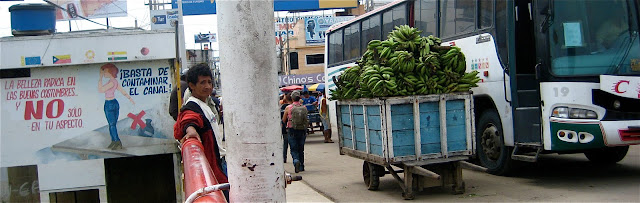
En muchos paises, comen fruta por la mañana porque hay tanto que crece en su tierra. En Ecuador, el Peru, y mucho del latino america, tambien comen mucha fruta para desayunar.


Y esta foto es sólo porque me gusta. Pero, no creo que la gente comen camarones gigantes.

Escuchar Sin Palabras

Una noticia de Madrid para nuestra clase. Intenten a entender la noticia sin sonido. ¿Cuanto entiendes?


domingo, 28 de febrero de 2010

¡Vamos ya!

To get us started, here is a quick tour of Aquí y Allá:

Profile:

Under the profile, you will find a brief description of your teacher and the goals she has for herself, and her present and future classrooms.

Nuestro Mundo:

In this section, you will find a list of links that connect you to further information and enrichment in Hispanic culture and language.
  • StoryCorps.Historias: listen to short stories of Latinos living in the United States.
  • Latino USA: read the news, or subscribe to the podcast! Listen and learn more about the Latino community in the United States with Maria Hinojosa as your host.
  • Colby College: this liberal arts college in Maine offers users a free, interactive website with grammatical and cultural resources for Spanish language learning. We will explore this page as a class, but there is no harm in exploring the site for your self, as so many materials are offered!
  • ¿Cómo se dice...?: this is an online Spanish dictionary that is user friendly.
  • Mi Vida Loca: feel like watching some TV? Instead of turning on that reality TV show, watch Mi Vida Loca online. The show offers drama and Spanish language support all in one!
  • V-me (pronounced "bay-may"): use this link find the program schedule for great shows on the Spanish channel. You can watch entertaining and thought provoking shows from the new, science and history, to cooking, design, and home- and self-improvement.
  • KCBS 91.3 fm: every Saturday, from 4:00 to 8:00 in the evening, tune into our local KCBS for ¡Sabor! and Al Lado Latino. Get your Saturdays movin' with latin and afro-carribean rythms.
  • Listen and Learn: this link will take you to a website created by the University of Austin, Texas. Watch videos of native Spanish speakers as they speak about their interests and lives. This website is designed for all levels of learners.
¡Espero que les gusta!

Enjoy these resources as they allow you to explore deeper into the joys of the Spanish language and the diverse Spanish-speaking cultures.

viernes, 26 de febrero de 2010

¡Hola y Bienvenidos!

The internet has the potential to inspire us, connect us , and motivate us to learn more about the world, and ourselves. It is my belief, as a future teacher, that we should use this immense resource to our greatest ability in order to experience the Spanish-speaking world around us: both in Seattle and beyond.

Aquí y allá is a resource for our class to do just the above: to make connections in meaningful ways.